
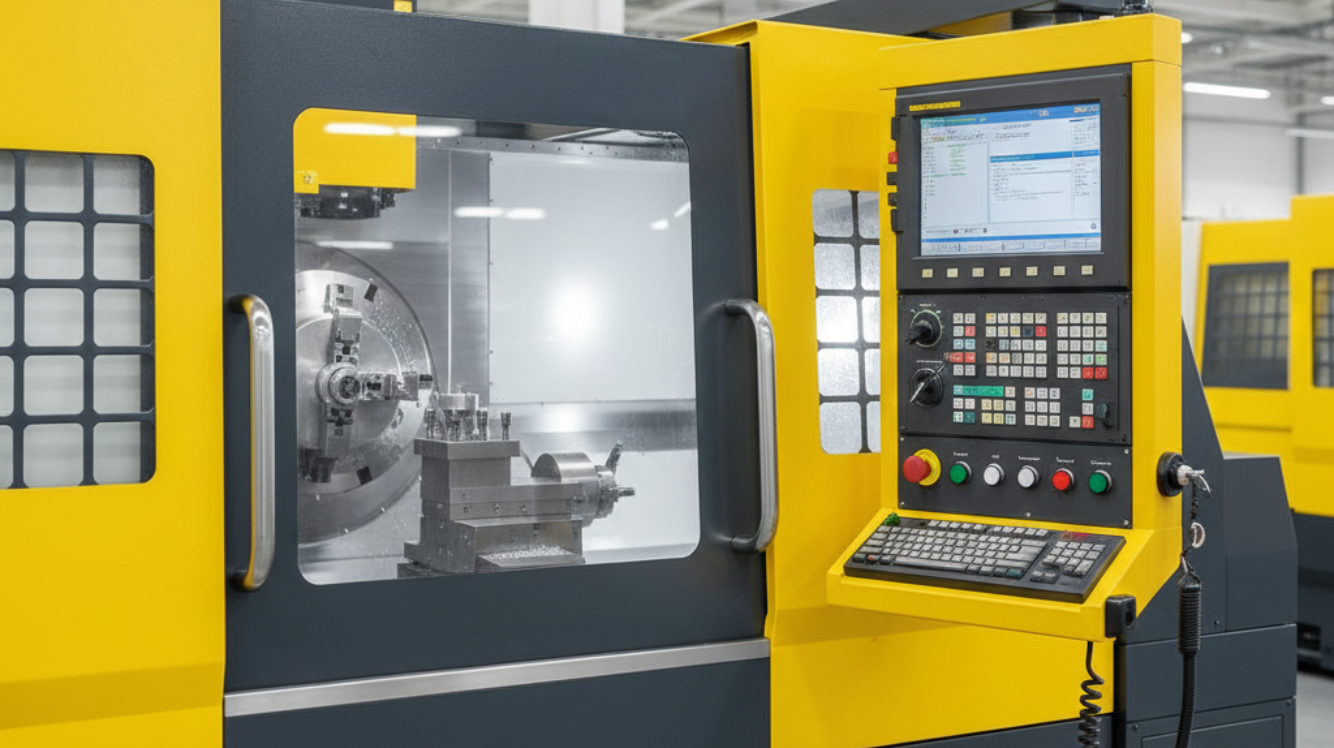
Walk into any modern manufacturing setup today, and you will notice one common theme: automation. That is literally everywhere! Whether it’s a robotic arm welding parts with absolute precision or a smart machine diagnosing its own performance, industries now rely heavily on technology to get work done with speed, consistency, and safety. And at the heart of this new world sit CNC and VMC machines. Before we get into the differences between CNC and VMC machine or their uses, it becomes important to understand, you should know a little about automation.
Automation is not just about replacing manual labour, but about making processes more reliable, reducing errors, improving consistency, and ensuring that industries can scale without compromising on quality. So, you can think of automation as the backbone of modern production lines.
Let’s begin with some basics!
Before we dive into the difference between CNC and VMC machines, we need to first learn what these two terms which are often misunderstood topics.
You can think of CNC as the brain of modern machining — and if you want a deeper understanding, here’s a complete guide on what is a CNC machine. A CNC system is what tells a machine exactly what to do using coded instructions — usually G-code. So when we say “CNC machine,” we’re talking about any machine that is computer-controlled instead of manually operated. This includes:
…and plenty more.
This machine right here can literally cut, drill, shape, and even find materials with incredible precision. It does not feel tired, lose accuracy, and repeats the same instruction perfectly, whether it is for one part or ten thousand!
A VMC, on the other hand, is a specific type of CNC machine. It’s basically a CNC milling machine where the spindle is positioned vertically. What this means in simple terms is:
This is where you will see how the CNC and VMC differences become clear — especially when you understand the various types of VMC machines. CNC refers to the technology (the method of controlling machines), while VMC refers to one particular type of machine built using that technology.
So here’s the simplest way to look at it:
All VMCs are CNC machines, but not all CNC machines are VMCs.
Also Read: Purpose of Servo Motor in FANUC CNC Motion Control Systems
Don’t worry, we will keep this one simple! When someone asks, “What exactly is the difference between CNC and VMC machines, and which one should I use?” this is how we break it down:
Now, naturally, questions like “What is the real CNC and VMC difference?”, “What is the difference between CNC and VMC machines?” and “Is VMC better?” arise. The truth is neither is “better.” They’re actually different tools for different needs.
Let’s talk a bit practically.
You choose a CNC (general CNC machine) when:
This is where the wide field of CNC machines makes sense. The CNC and VMC difference shows up clearly here, because CNC gives you many machine formats.
You choose VMC when:
Even today, many people mix up CNC and VMC terms, which is why searches for CNC and VMC differences, CNC vs VMC, and the difference between CNC and VMC machines are so common. Here are the top confusions we will help you with today:
No! VMC is under CNC. The confusion comes from the name. If VMC were called “Vertical CNC Mill,” people would immediately understand.
Mostly yes, but it can work on plastic, composite, and other materials!
Well, no. CNC is a control system, while milling is just one function.
This is clearly the most common form of confusion in CNC vs VMC discussions. A VMC is a CNC, which is used for a specific purpose.
No. A VMC cannot perform turning operations like a CNC lathe.
You should understand the difference between CNC and VMC so you can choose the right setup, without over-investing! And well, now, you know it all.
If you ask us, automation is no longer optional. It's literally the backbone of modern industry. From small workshops to large-scale factories, CNC and VMC machines continue to shape the future of manufacturing. When you truly understand the CNC and VMC machine differences, you can make smarter decisions about tools, investments, and production planning.
And we get it! The difference between CNC and VMC machines may seem small to beginners, but for manufacturers, these differences change entire workflows. Knowing the right tool helps you improve efficiency, reduce rework, and produce consistently high-quality parts.
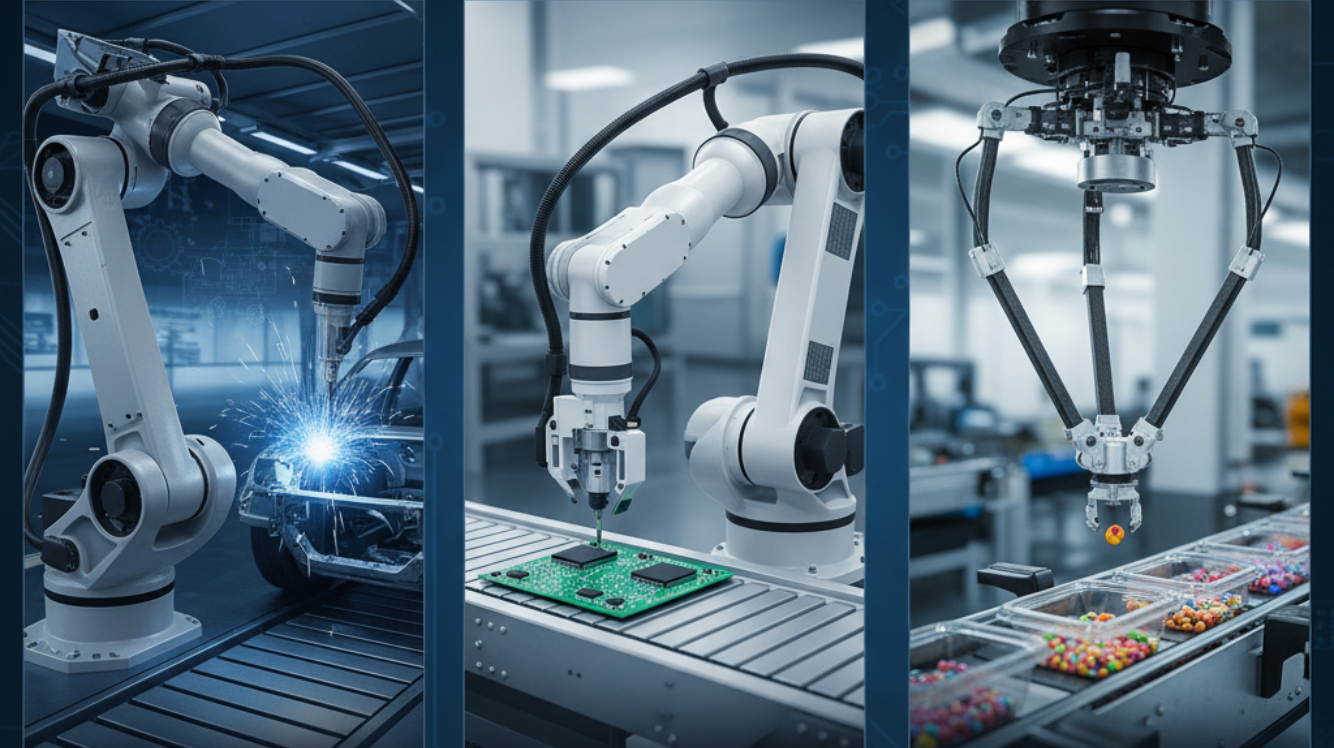
Discover various types of robotic arms used in industries like automotive, electronics, and packaging. Compare articulated, SCARA, delta, and cobot designs.
Know MoreUnderstand the CNC and VMC machine difference, their functions, applications, and which one suits your machining needs. A clear and simple comparison.
Know More
Understand the main types of industrial robots — articulated, SCARA, delta, and cobots. Learn their applications, advantages, and impact on modern manufacturing
Know More
.avif)


