
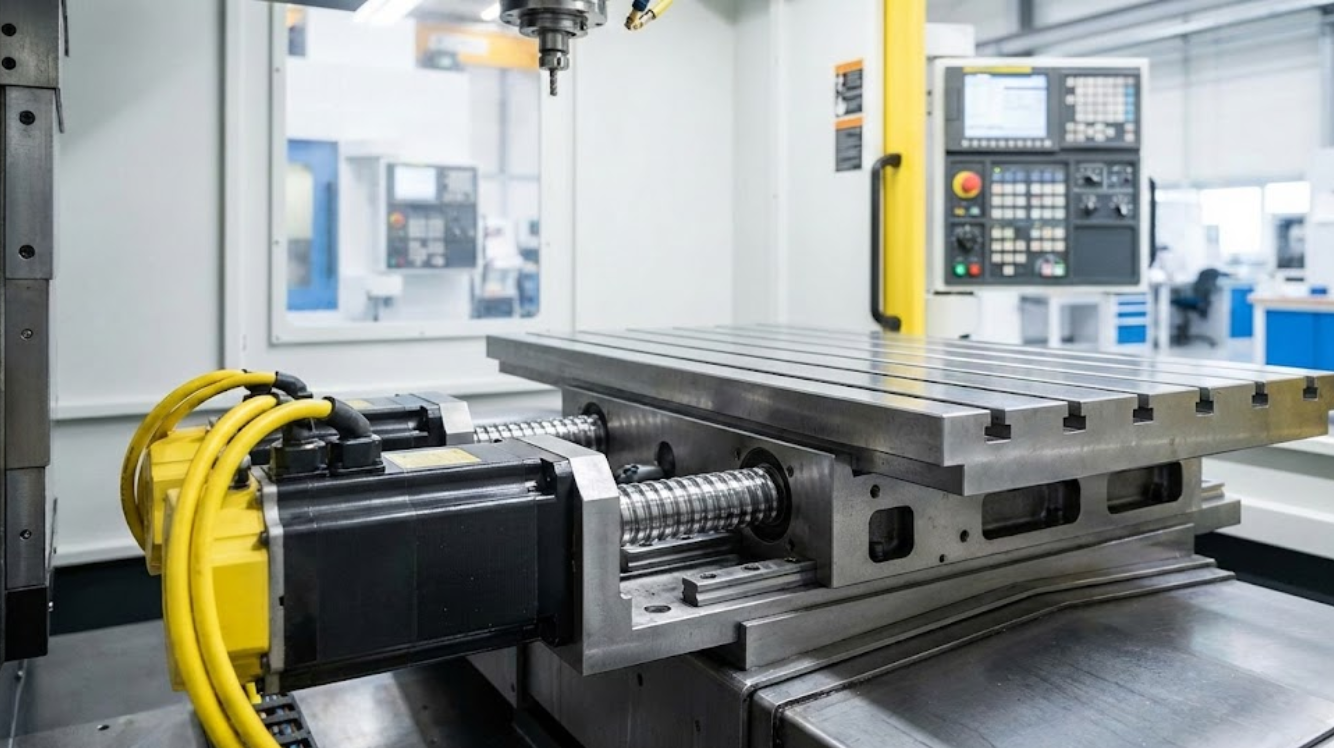
The purpose of servo motor technology in modern CNC systems goes far beyond simple motion! It is about precision, reliability, and total control that you get with this smart addition. At FANUC India, we work every day with manufacturers who only ask us for two things: accuracy and repeatable motion.
And there is no doubt that Servo motors are the backbone of CNC motion control, which helps machines to respond to commands, adapt to the changing loads, and deliver consistent machining performance.
So if you are someone who is looking to improve machining accuracy, reduce cycle times, or simply need reliable automation, then having an understanding about servo motors will be the apt solution for you.
In this article, we will talk about servo motor information, why they matter in CNC motion control, and how FANUC CNC and servo technologies come together to help manufacturers like you achieve their automation goals!
First things first, let’s discuss about servo motor.
The servo motor meaning is basically a precision-controlled motor system that is designed to deliver exact position and speed based on the commands it gets.
So, unlike those conventional motors that simply rotate at a set speed, servo motors actually constantly keep a check of what they are doing and correct themselves if needed. This way, they work as part of a system that includes:
This is why a servo motor is a typical example of a closed-loop control system. It is where actual motion is continuously compared with commanded motion and is corrected in real time!
So we can say that the purpose of servo motor design is simple but powerful: make sure the machine moves exactly as instructed, even when loads change, or the conditions are not ideal.
And when it comes to CNC machines, they don't just need motion, but controlled motion. If the tool moves even slightly off-position, it can lead to poor surface finish, rejected parts, or even tool damage, which can be a high cost to bear. Thanks to servo motors, these risks are replaced by accuracy and solid repeatability.
Now, to understand how does a servo motor works in CNC systems, here is what you need to know! The thing is, in a CNC system, the motion you see happens in coordination.
The axes move together, Axes move together, tools engage material, and cutting forces constantly change. This is where servo motors make sure this complexity doesn’t turn into chaos!
The CNC controller sends a command (move to this position, at this speed) ➜ The servo drive powers the servo motor ➜ The motor moves the axis ➜ An encoder measures the actual movement ➜ Feedback is sent back to the controller ➜ Corrections are made instantly if there’s any difference.
This loop runs continuously, many times per second. According to FANUC’s CNC motion control principles, this feedback-driven approach is what allows machines to maintain accuracy even during high-speed operations!
So yes, when people ask how does a servo motor works, the answer is that it keeps checking itself and fixing errors before they become problems!
This is where servo motors truly prove their value!
At FANUC India, our CNC controllers, servo motors, and servo drives are designed to work as a single, integrated system. The purpose of servo motor technology within FANUC CNC motion control is to execute every movement with confidence. This way, there will be no guesswork, no drift, no surprises! In manufacturing, predictability is the measure of success!
Servo motors help CNC axes move to the right position and stay there. This matters a lot when you’re working with tight tolerances or complex parts. Here, high-resolution feedback actually makes sure the machine knows exactly where each axis is at all times.
If we talk about most CNC machines today, they do not move in straight lines on just one axis. Today, multiple axes move together, often at the same time. And to make this multi-axis movement feel smooth and not forced, Servo motors handle the coordination so the curves come out smooth.
Here is what no one tells you: Real machining is never “constant.” Tools wear out, materials behave differently, and feed rates vary. But one important purpose of servo motor systems is to react instantly. This actually helps add or reduce torque and speed as needed, so the machining process stays stable even when conditions change mid-cut.
These motors are designed for continuous industrial use. Sothese machines can run for long hours, and unlike humans, it does not get tired and give consistent performance. This means youtube fewer unexpected stops, less rework, and lower maintenance headaches on the shop floor!
Last but not least, it uses power only when it is actually needed, and that’s what makesit smart! Servo motors don’t waste energy by running flat out all the time. They deliver just the right amount of power at each moment. And over time, this makes motion more efficient, especially in applications with frequent starts, stops, or partial loads.
Here are some typical industrial applications,which will help you know more about servo motor!
In all these cases, the purpose of servo motor technology stays the same: take digital commands from the CNC system and turn them into accurate, repeatable physical movement, cycle after cycle!
Quick Takeaway: The major purpose of servo motor systems is not just accuracy, but also consistency. And this consistency is what makes production planning and quality control easier.
Servo Motor vs Induction Motor
Also, here is a quick comparison table of a servo motor vs induction motor:
When you look at a servo motor vs induction motor in a CNC setup, the difference becomes pretty obvious. Servo motors are built for precision. Induction motors, on the other hand, are great for simple rotation. This is where the servo motor meaning really becomes clear!
One thing is clear: Servo motors are not optional components in modern CNC systems. In fact, they are pretty important, as the ability to constantly monitor, adjust, and correct motion is what allows machines to operate.
It gives manufacturers confidence, speed, and precision. So, without them, the whole manufacturing unit will only rely on unpredictable outcomes, risks, and guesswork. Which is not what you or any of our customer wants!
This is why we at FANUC India think of the purpose of servo motor technology as more than motion control. It is actually a lot more about enabling you to produce better parts, reduce errors, and scale automation without having to compromise on reliability.
After all, we understand the need for predictability and repeatability, which is why servo motors work seamlessly with our CNC systems!
1. What is the use of a servo motor in CNC?
A servo motor helps to control the position and speed of CNC machine axes. It does it by using real-time feedback and then acting on it.
2. What is a servo motor in a control system?
A servo motor in a control system is a closed-loop motor system that adjusts motion based on continuous feedback.
3. What are the advantages of servo motors?
Here are some of the advantages: High accuracy, fast response, adaptability to load changes, and consistent performance. Also, there is less guesswork and more predictability!
4. What are the two main types of servo motors?
The two main types of servo motors are AC servo motors and DC servo motors. Although you will notice that SC servos are more common in CNC applications than DC!
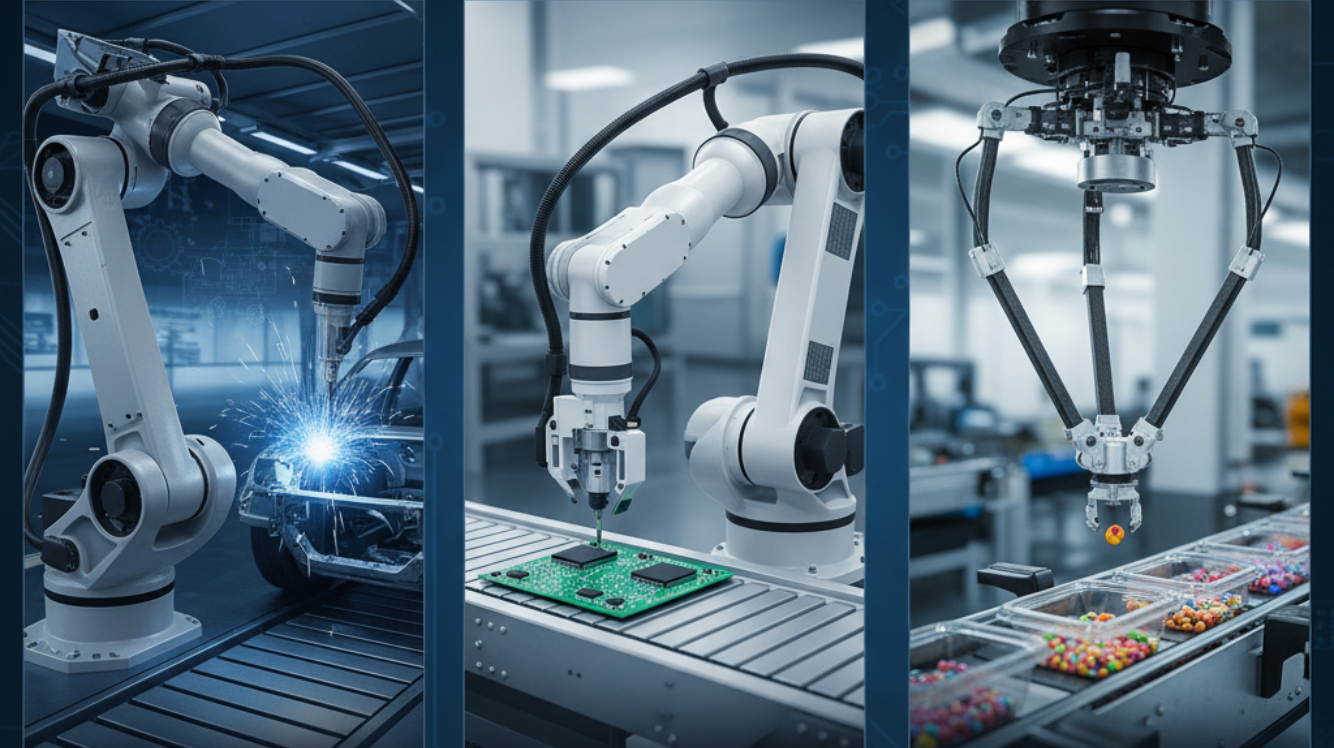
Discover various types of robotic arms used in industries like automotive, electronics, and packaging. Compare articulated, SCARA, delta, and cobot designs.
Know More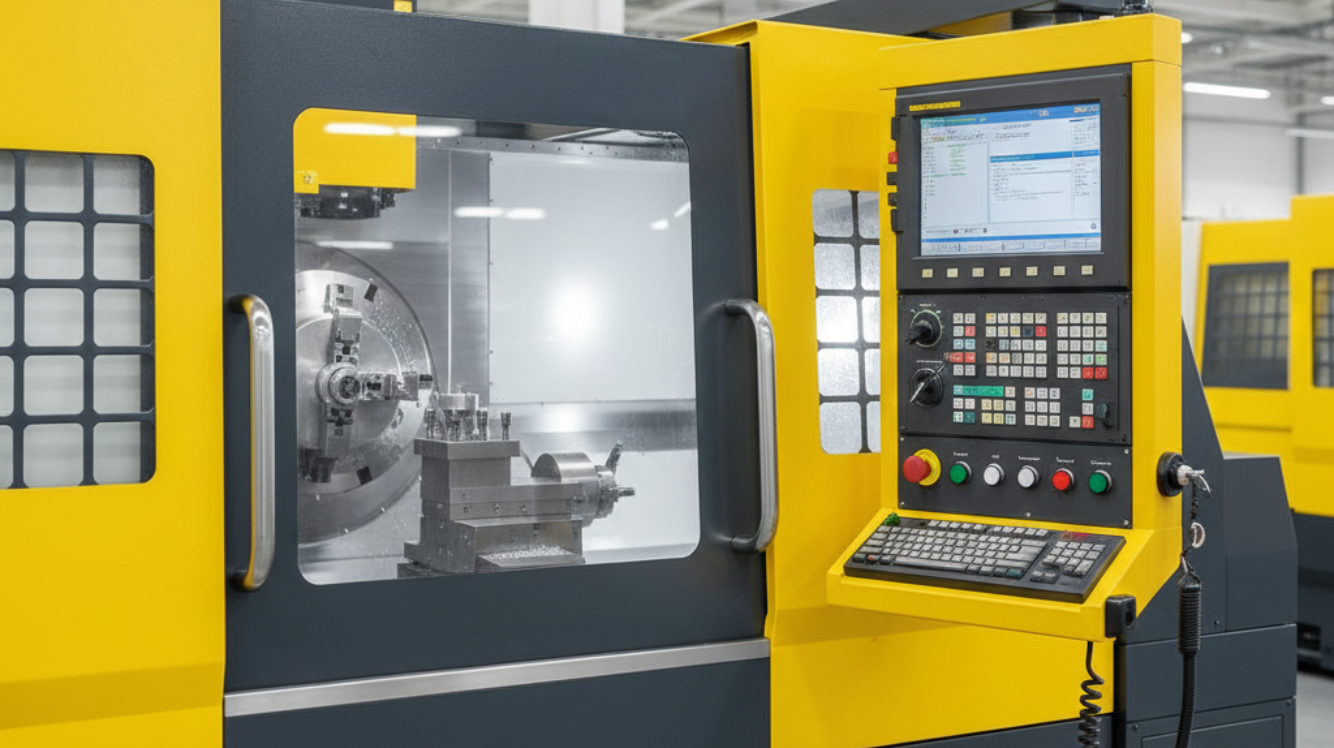
Understand the CNC and VMC machine difference, their functions, applications, and which one suits your machining needs. A clear and simple comparison.
Know More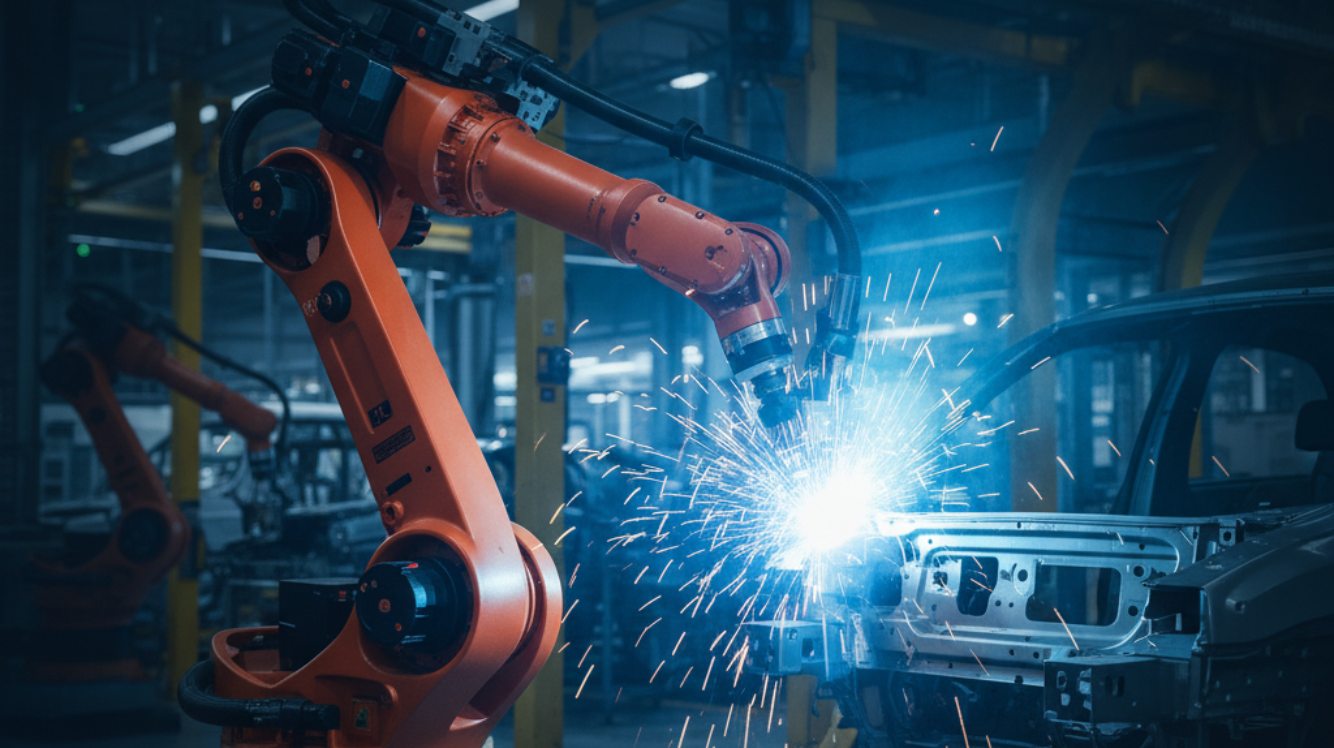
Understand the main types of industrial robots — articulated, SCARA, delta, and cobots. Learn their applications, advantages, and impact on modern manufacturing
Know More
.avif)


