
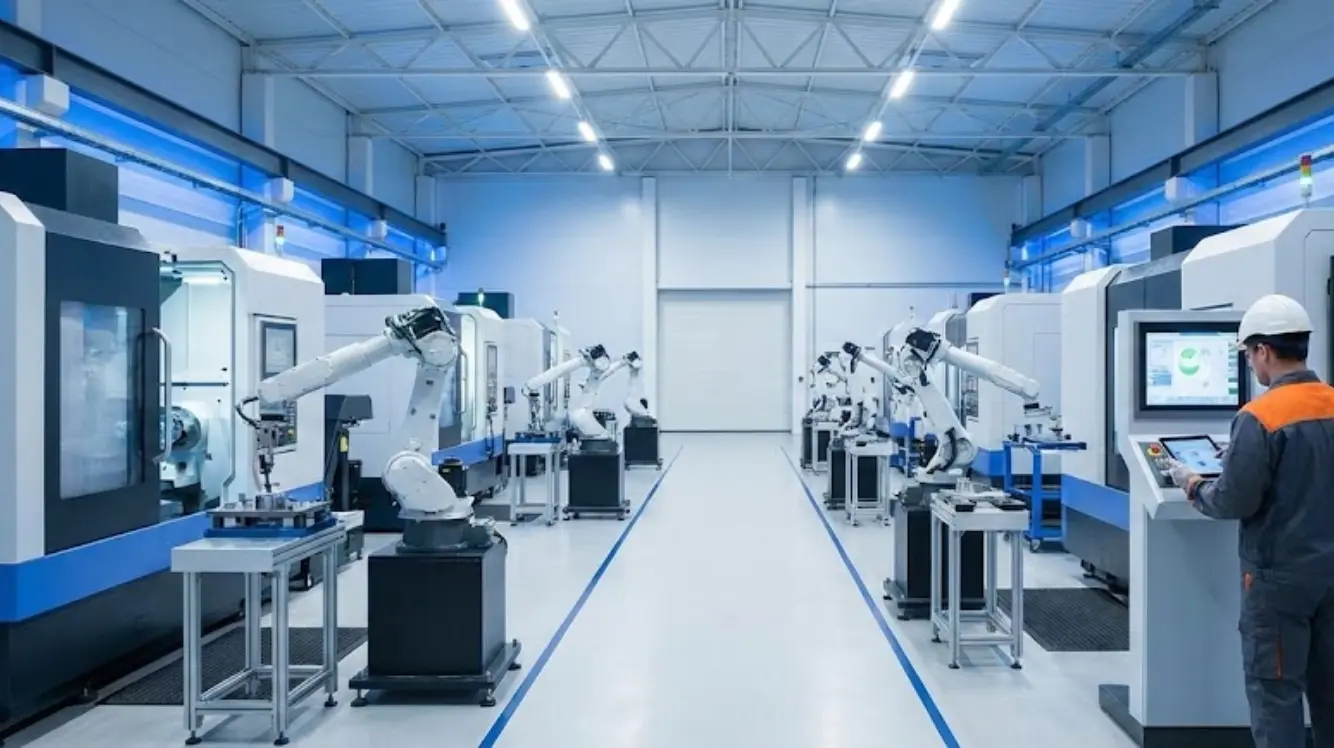
On a factory floor, machines move around with precision, parts get shaped perfectly, and everything runs in a smooth rhythm. What most people don’t see is that this smooth flow doesn’t come from machines alone. A big part of it comes from CNC automation working quietly in the background.
In this day and age, manufacturing is no longer about just getting a part made. It's about making the same part again and again, that too with the same accuracy, speed, and with as little room for error as possible.
That’s where CNC automation changes the whole game, as now, instead of depending on constant manual points, you can choose connected systems. Here, machines coordinate with software, sensors, and sometimes even robots that keep things moving without much interruption.
And we get it! An automatic CNC machine, robotic CNC machine, or CNC automation machine can feel a bit intimidating at first. But the idea behind them is actually quite straightforward. These systems are simply designed to reduce unnecessary human involvement and let machines handle repetitive, precision-driven tasks on their own.
Now, without any further ado, let’s talk about all you need to know about CNC machines!
Before we get deeper into automation, let’s take a step back and look at the basics of it. A CNC machine is short for Computer Numerical Control. It is basically a machine that works on instructions coming from a computer.
So instead of an operator manually controlling every movement, the machine follows a set of programmed commands. These carry out tasks like cutting, drilling, milling, or shaping a material. Once the program is set, the machine knows exactly where to move, how fast to move, and how much material to remove.
This is truly the heart of the CNC machine working process. A part is first designed on a computer, and that design is converted into a format the machine understands. Now, the machine executes it with a level of precision, and this can be very hard to achieve by hand.
The real advantage here is the consistency you get. The same part can be produced again and again with the same accuracy. This is something manual machining definitely struggles with, especially when dealing with larger volumes.
So, what really changes when automation enters the picture?
With CNC automation, the shift is bigger than just putting a computer in charge of a machine. What actually happens is that multiple systems start working together.
Whether it is software, controllers, or, in many cases, robotics, they are all connected. So the entire operation runs smoothly without someone having to step in at every stage.
Simply put, the machine is not just following instructions but also is a part of a connected setup where each step supports the next.
So, things that would normally slow the production down, an automation CNC machine takes care of that. Tool changes happen on their own, operations move from one step to the next without stopping, and machines can even share information. So having a single operator can easily oversee several machines at once, rather than manually managing each of them.
The goal here is consistency. It's meant and built in a way that it can run for longer hours, have accuracy every time, and keep production steady. That’s exactly why manufacturers are choosing CNC automation machines that will help:
Now, if you add robotics to the setup, it takes things a step further. A robotic CNC machine uses industrial robots to handle repetitive tasks like loading raw material, unloading finished parts, or running quality checks.
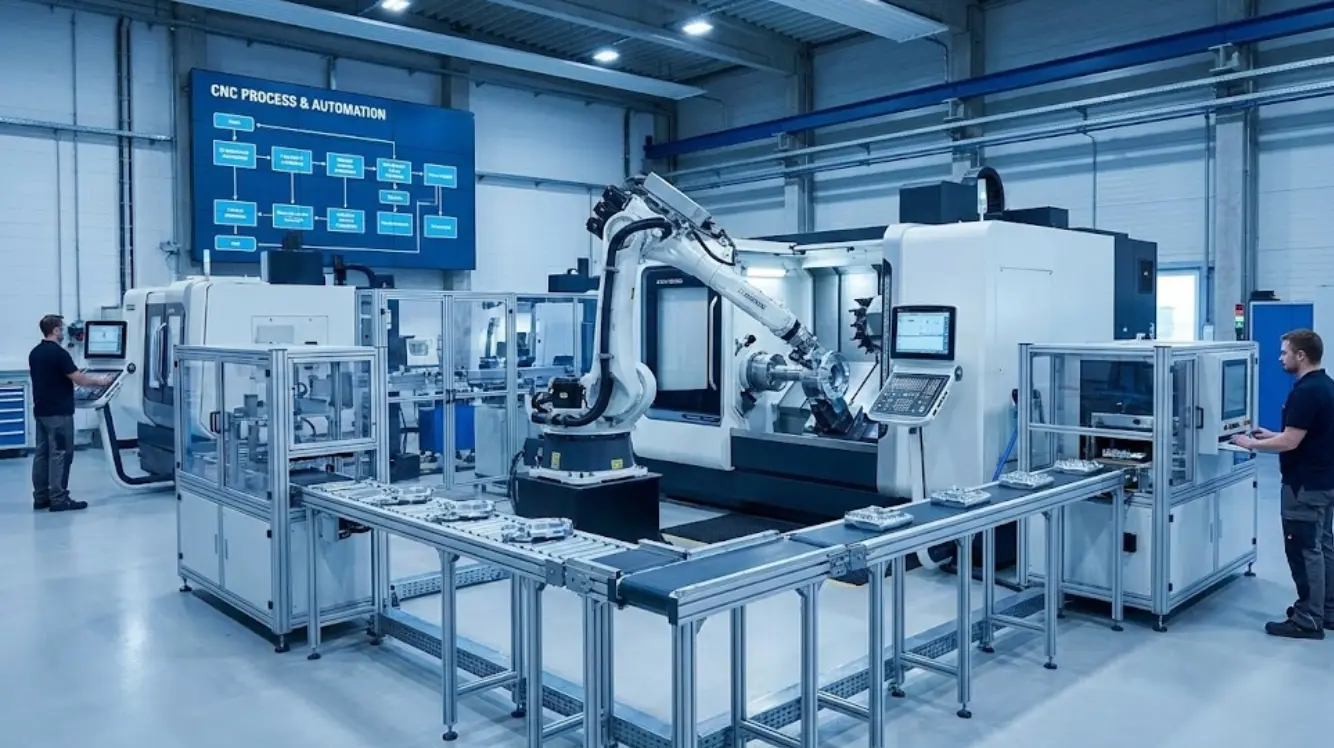
To really see the value of automation, you should look at how the CNC machine's working process operates in an automated setup:
The CNC machine working process always begins on a computer. A part is designed with the help of CAD software, and that design is then converted into instructions the machine can understand using the CAM software. Once this step is done, the machine knows exactly what to do, how to do it, where to cut, how fast to move, and how much material to remove.
In a regular CNC setup, this is usually the point where you will see operators step in. But when you have CNC automation, that does not happen as much. The process simply continues on its own without someone having to watch constantly, adjust, or interfere at every stage.
As you know by now, an automatic CNC machine does not need manual help for basic operational tasks. It can literally change tools by itself, adjust settings during a job, and run the program smoothly from start to finish. And guess what? That saves time and keeps production moving without hindrances.
There are sensors that continuously keep a check on things such as tool condition, machine temperature, and overall performance. If something doesn’t look right, the system either alerts the operator or corrects small issues on its own. This is exactly how CNC automation machines make the CNC machine working process more stable and dependable.
When all these parts come together, the CNC machine and automation will stop feeling like an add-on. Instead, they are now the natural way modern manufacturing works, especially when consistency, efficiency, and scale really matter.
So why does it really matter?
It matters because end of the day, manufacturing is about getting better results with less friction. CNC automation makes that possible by bringing efficiency, consistency, and long-term growth into the same system. When automation is in place, manufacturers can actually produce more part sin less time without having to compromise on quality.
An auto CNC machine doesn’t slow down, lose focus, or introduce small variations from one shift to the next. It just repeats the same operation with the same level of precision. It does not matter whether it’s the first part of the day or the thousandth.
That is also a very practical safety advantage because automation reduces the need for people to work close to sharp tools, moving parts, and high-speed operations. It takes over physically demanding tasks that would otherwise put strain on workers over time.
If you ask us, that's the best use of robots. Even if you look at it from a business point of view, CNC automation machines will make it much easier for you to scale. It will reduce dependency on manual labour, cut down material waste, and deliver output that is far more predictable. This is where FANUC plays a great role by helping you build systems that are reliable, precise, and designed for long-term use.
One key takeaway from this article is how CNC automation isn’t really about pushing people out of the picture. It’s about letting machines handle the repetitive, precision-heavy work, so people can focus on things that actually need human judgment.
This includes supervision, planning, problem-solving, and improving the process! If you deal with machining in everyday life, then CNC automation machines will keep everything around you running smoothly day after day, shift after shift, without losing pace.
Not at all. While large factories benefit greatly from CNC automation, small and mid-sized manufacturers can also adopt it. Many start with partial automation like automatic tool changers or basic monitoring systems and scale up as production needs grow.
No. CNC automation reduces manual involvement in repetitive and precision-heavy tasks, but human expertise is still essential. Operators are needed for programming, supervision, maintenance, quality checks, and process optimization.
An automatic CNC machine handles internal processes like tool changes and program execution on its own. A robotic CNC machine goes a step further by using industrial robots for tasks such as loading and unloading materials, part handling, or inspection.
It may seem complex initially, but the fundamentals are quite manageable. Once you understand basic CNC machine working processes, automation mainly builds on them with software integration and monitoring systems. Proper training and support make the transition much easier.
The biggest advantages include higher production consistency, reduced downtime, improved safety, lower manual errors, and easier scalability. Over time, CNC automation helps manufacturers maintain predictable output while keeping costs under control.
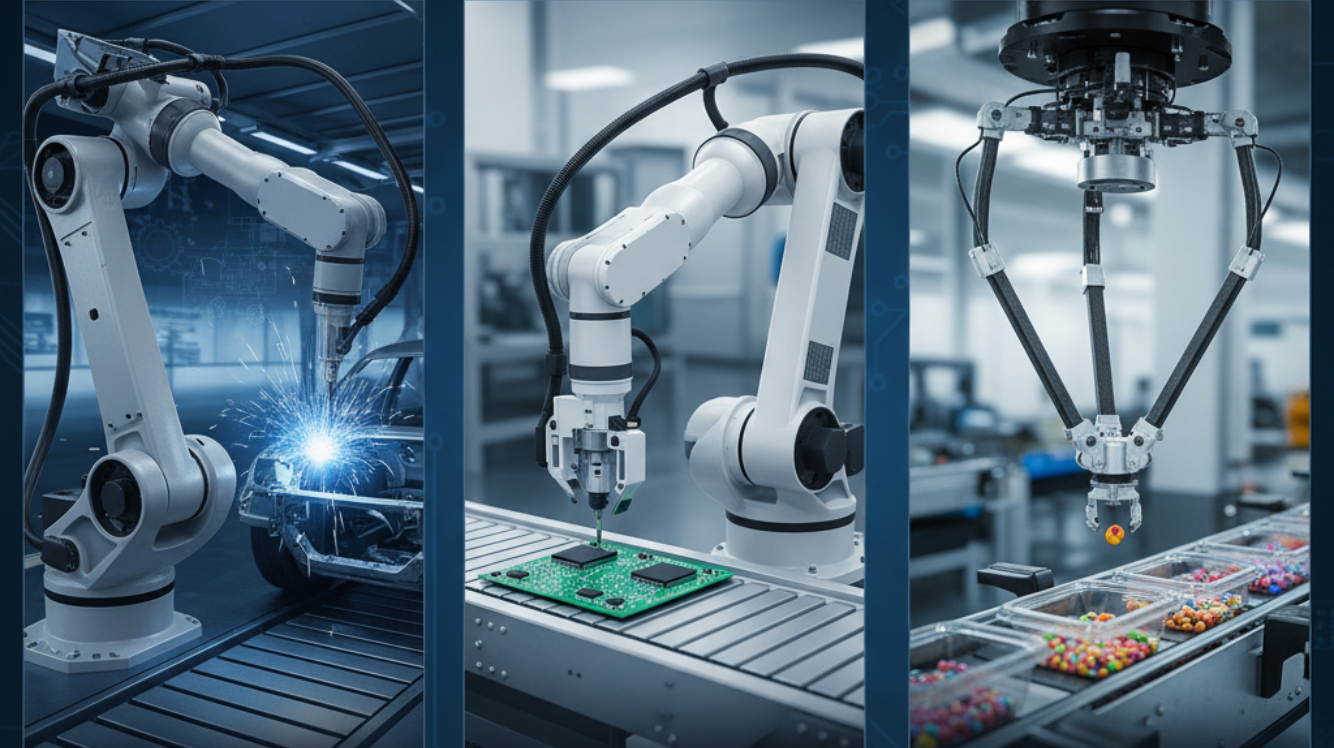
Discover various types of robotic arms used in industries like automotive, electronics, and packaging. Compare articulated, SCARA, delta, and cobot designs.
Know More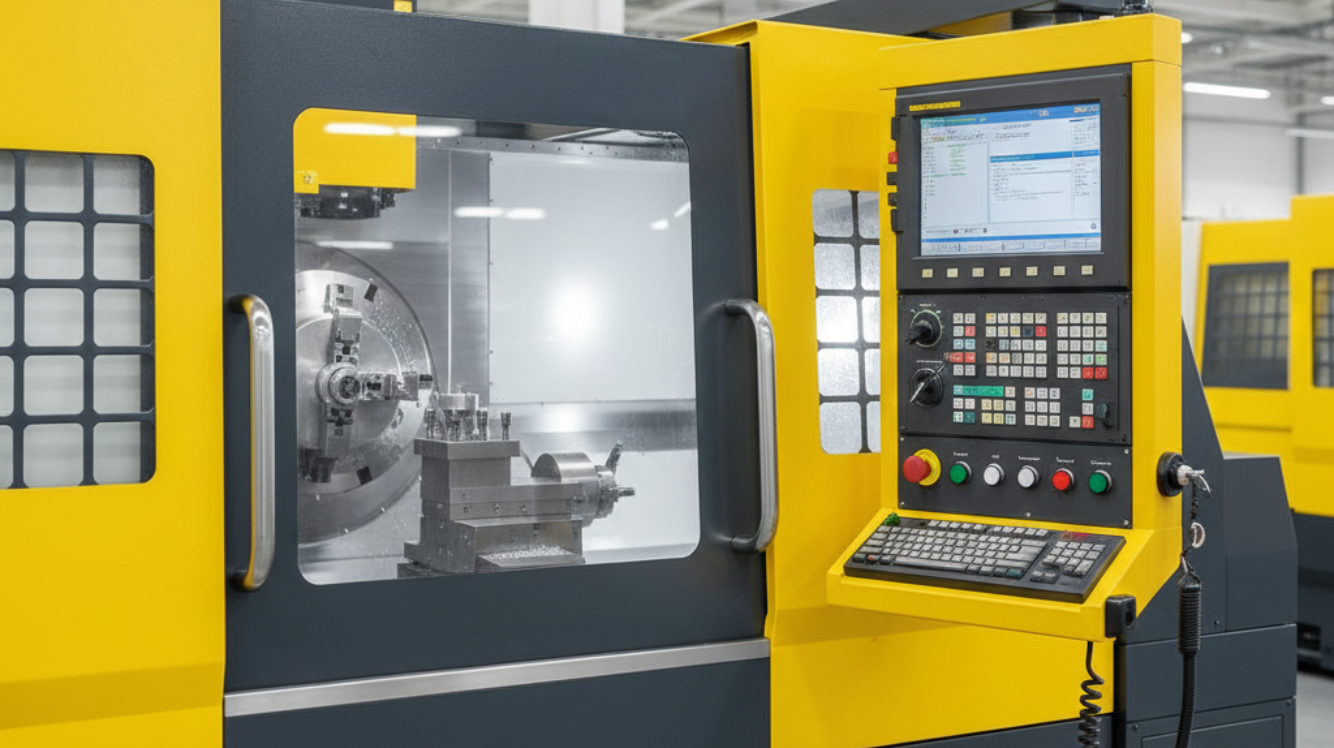
Understand the CNC and VMC machine difference, their functions, applications, and which one suits your machining needs. A clear and simple comparison.
Know More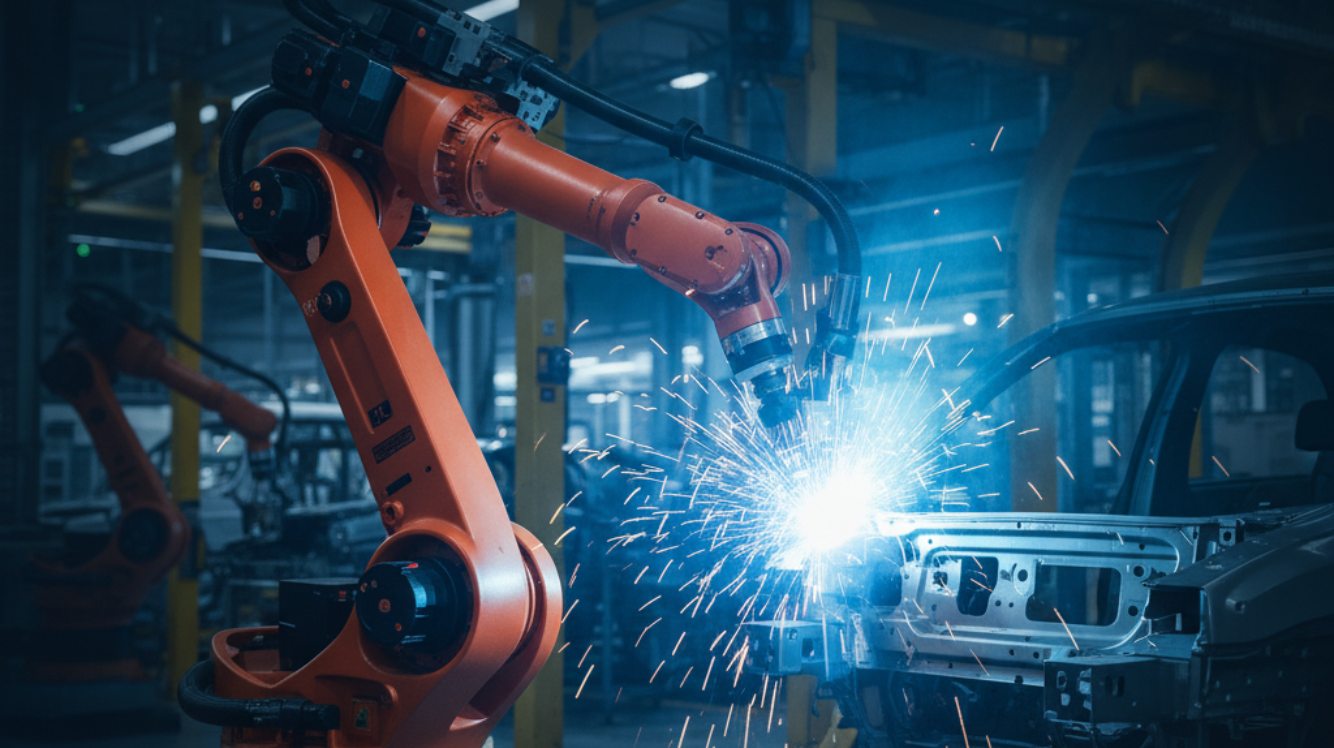
Understand the main types of industrial robots — articulated, SCARA, delta, and cobots. Learn their applications, advantages, and impact on modern manufacturing
Know More
.avif)


