
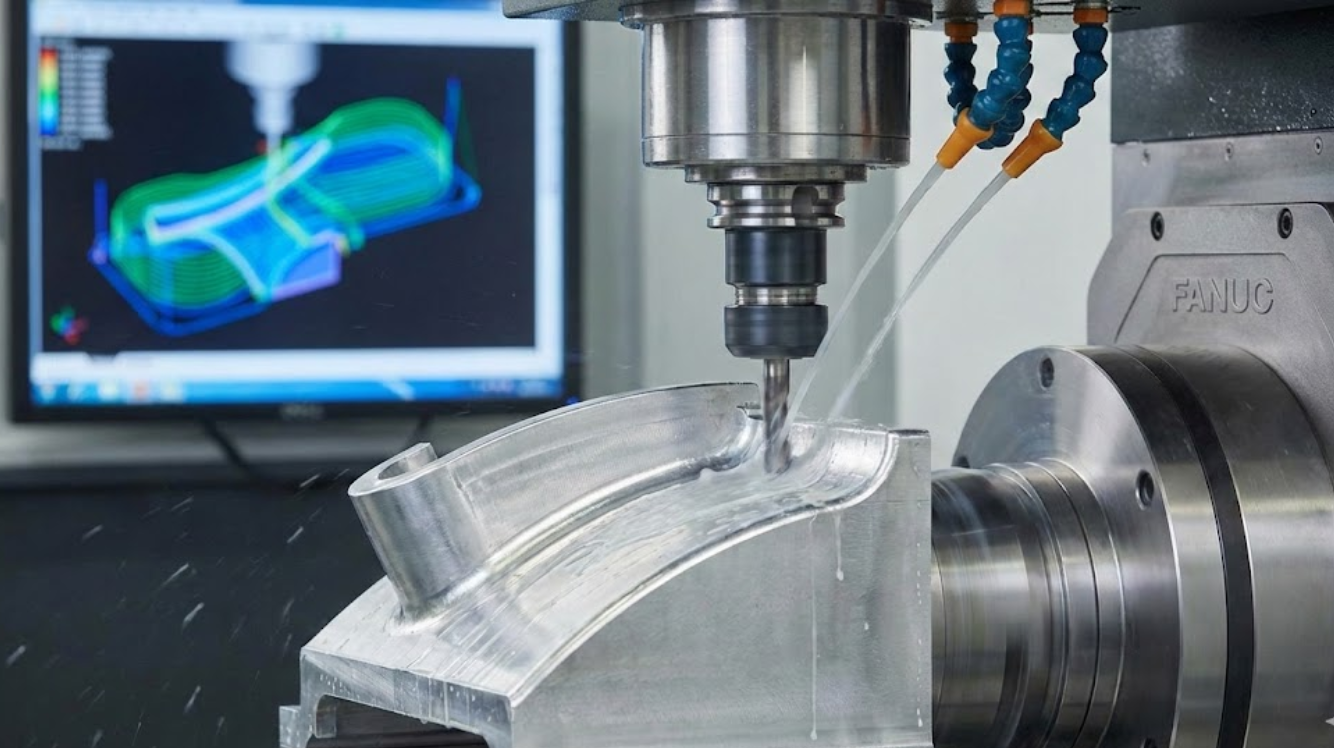
In modern CNC machining, accuracy begins with motion planning. And CNC machine interpolator controls play a huge role in how precisely a tool moves along its programmed path.
Here, when we talk about modern manufacturing, it's evident that accuracy is no longer a “nice-to-have” but rather has become a baseline expectation. Whether you are machining automotive components, aerospace parts, medical devices, or high-precision tooling, the ability to produce consistent, repeatable, and complex geometries depends heavily on how well your CNC system controls motion.
At FANUC India, we often see customers focus on machine rigidity, cutting tools, or spindle speed. And while all this matters, there is a less visible but equally critical factor behind all this accuracy, which is the interpolation in the CNC machine controls! So, if we put it simply, even the best machine structure cannot deliver results if the motion logic is weak. This is where the CNC machining controller and its interpolation capability make the real difference. Now, let’s have a deeper look at it!
Interpolation is simply how a CNC machine decides how to move smoothly from one point to another. When a program tells the machine to cut a shape, the machine doesn’t jump from point A to point B. Instead, the interpolation in a CNC machine controls all the tiny movements in between so the tool moves continuously, smoothly, and accurately.
You can think of it like drawing a circle. You don’t lift your pen and tap dots. All you do is move your hand in one clean motion. Interpolation does the same job inside the CNC system. So in a real-world machining, interpolation actually allows the CNC controller to:
To add to it, all of these calculations literally happen inside the CNC controller in milliseconds. That is why the quality of interpolation directly affects part accuracy, surface finish, and even how long your tools last.
FANUC Tip: If your surface finish looks uneven or dimensions keep drifting even with good tooling, weak interpolation is often the real culprit.
As soon as machining goes beyond simple straight cuts, that’s exactly when you need interpolation more than ever! The interpolator is present in case of any CNC operation where two or more axes move together. Even basic 3-axis machining needs coordination. In 5-axis machining, that coordination becomes extremely demanding.
So, here is what happens without strong CNC machine interpolator controls:
At FANUC India, we work closely with customers where microns matter: automotive, aerospace, medical, and tooling applications. Time and again, we have seen that machines with advanced interpolation deliver:
And so, simply put, the interpolation in a CNC machine controls how intelligently the machine behaves once cutting actually begins.
Our CNC systems are actually built to handle complex motion reliably, day after day! The CNC machine controller is constantly doing three things at once:
Now this closed-loop system is exactly what defines modern CNC machining. FANUC’s CNC controller is best known for:
It is because, here, our CNC machine interpolator controls use a technique where the controller not only reacts to the next command, but even prepares for what’s coming!
This way, you get:
Because when it comes to multi-axis machining, even tiny timing errors can affect the part quality. So yes, when you have a strong interpolation by your side, those errors get eliminated before they even happen!
In 3-axis systems, the interpolation in a CNC machine controls straight and curved motion on flat planes. In 5-axis systems, the interpolator must also manage the tool angle while keeping motion smooth and synchronized.
You will often find an interpolator in cases such as:
And our CNC sustme sare designed specifically keeping in mind the challenges that occur with such cases. Our CNC controller makes sure that every axis moves together, and even at high speed and under heavy load, it works smoothly.
If you ask us, then these advantages are enough to explain why a machine is said to have CNC control if it relies on advanced interpolation instead of some basic point-to-point motion!
When we talk about modern machining, you cannot ignore that having a strong machine or sharp cutting tools is no longer enough!
What really makes the difference is how smartly the machine moves. Whether it’s a straightforward 3-axis operation or a complex 5-axis job, the interpolation in a CNC machine controls how smoothly and accurately the tool follows its path.
Behind the scenes, the CNC machine controller and CNC controller work together to calculate motion, keep every axis in sync, and literally make real-time corrections while the machine is cutting.
So in short, you will never have to do the guesswork, as precision and consistency will be there every time! And this is how we at FANUC help manufacturers not just have better control over their machines, but also predictability and confidence in every part they produce!
1. What does a CNC machine interpolator do?
It basically calculates all the small movement steps between programmed points. This way, multiple axes can move together, smoothly and without jerks or mismatches.
2. What is interpolation in CNC machining?
It’s the method by which the CNC controller creates continuous tool motion instead of abrupt jumps.
3. Why is interpolation important in multi-axis machining?
It is because the interpolation in a CNC machine controls axis coordination, which then brings more accuracy and surface quality, which would be difficult to achieve otherwise.
4. How does a CNC controller improve machining accuracy?
The most reliable way a CNC controller improves the overall accuracy of the products produced is by acting on the feedback and advanced interpolation logic. This literally corrects motion in real time, without any delay!
5. In which case is an interpolator present in CNC systems?
The interpolator is present in case of any CNC system that performs simultaneous multi-axis motion, especially contouring and 5-axis machining. For example, aerospace industries, medical implants, mold and die surfaces, etc. Bascially in spaces where you cannot compromise on predictability and accuracy.
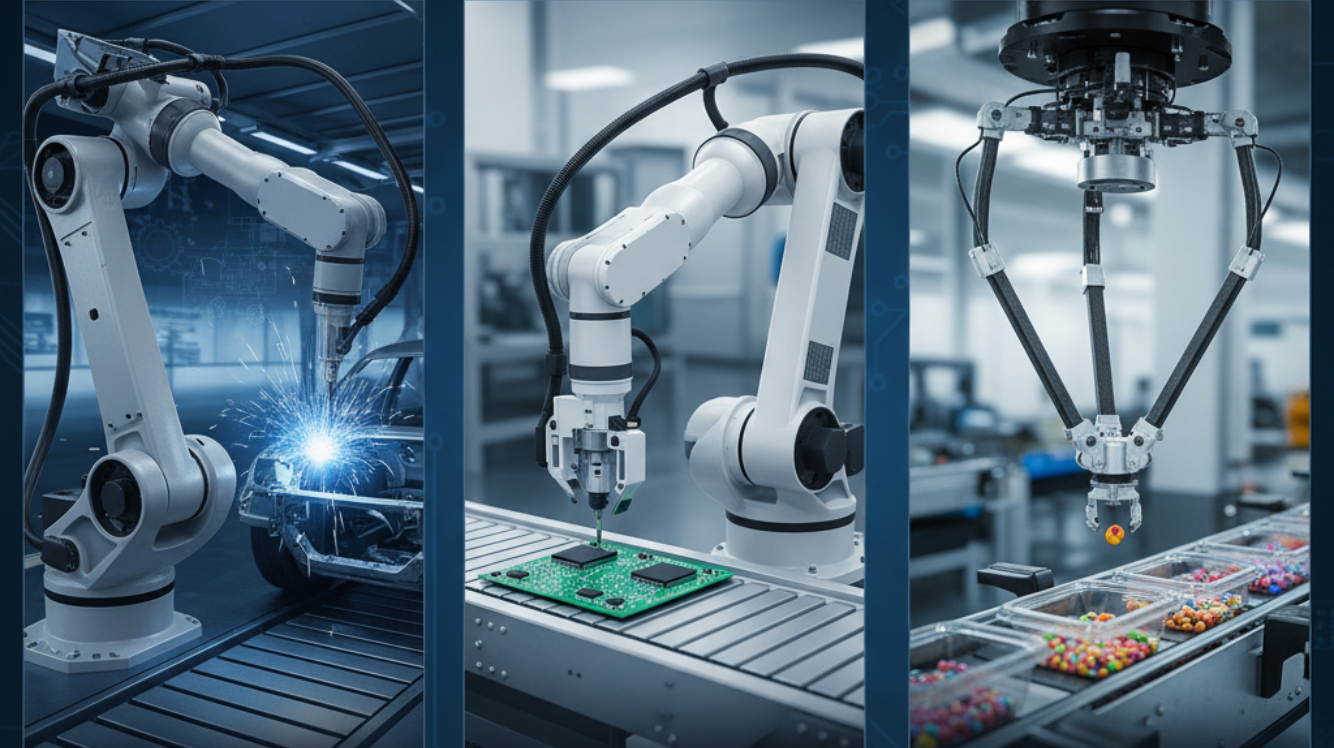
Discover various types of robotic arms used in industries like automotive, electronics, and packaging. Compare articulated, SCARA, delta, and cobot designs.
Know More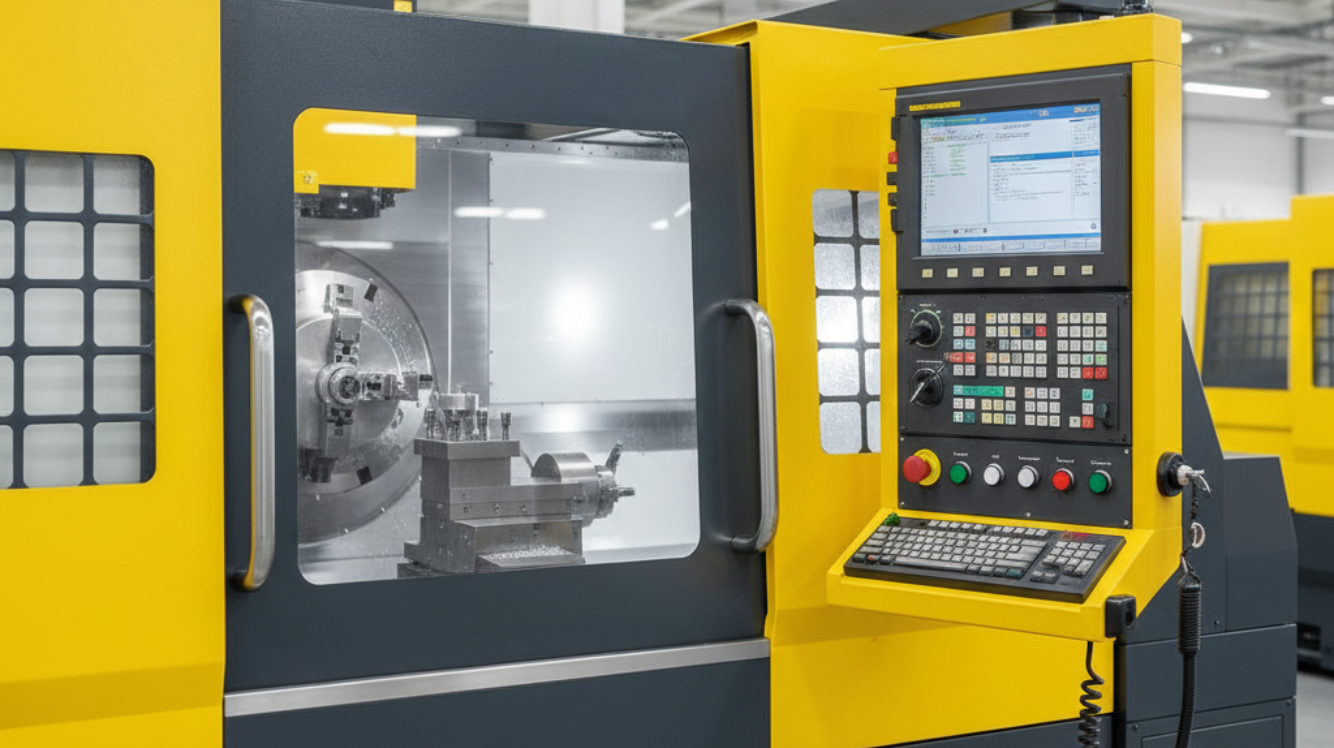
Understand the CNC and VMC machine difference, their functions, applications, and which one suits your machining needs. A clear and simple comparison.
Know More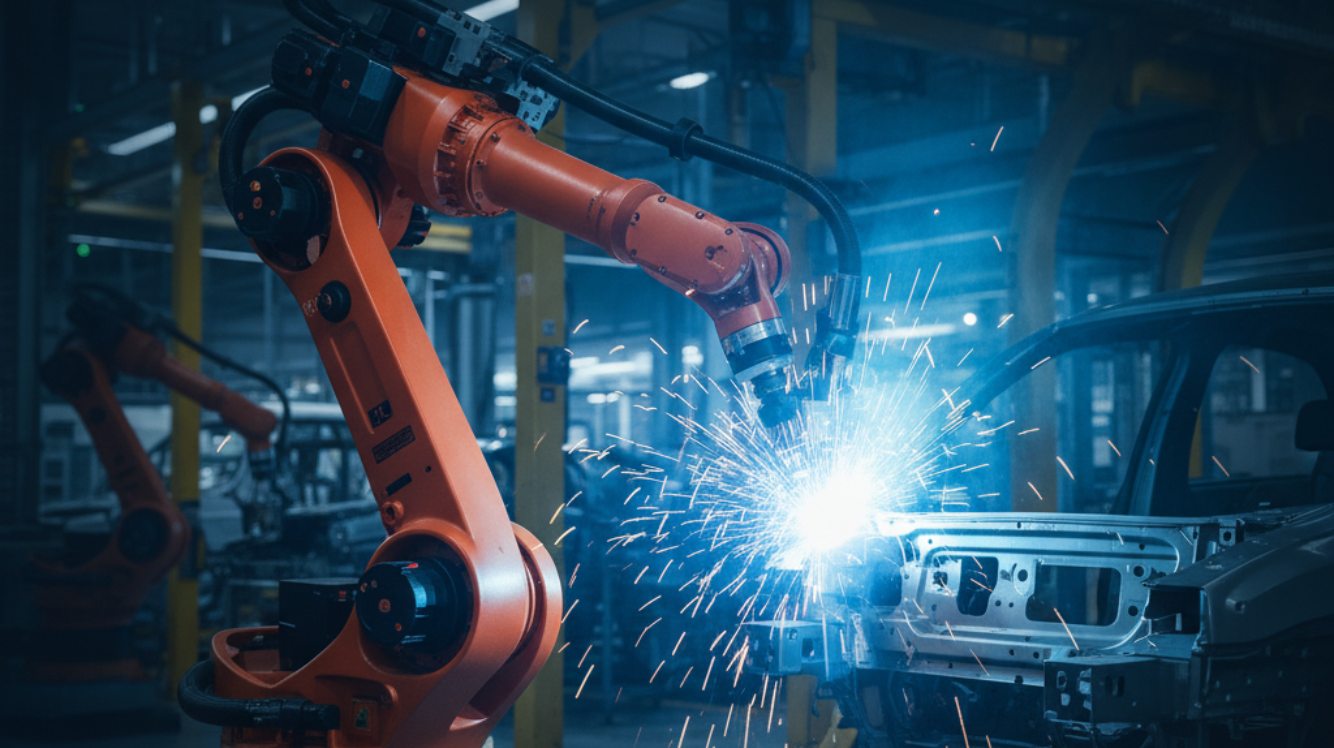
Understand the main types of industrial robots — articulated, SCARA, delta, and cobots. Learn their applications, advantages, and impact on modern manufacturing
Know More
.avif)


